Monday, December 12, 2011

Onward by Howard Schultz

Onward: How Starbucks Fought for Its Life without Losing Its Soul by Howard Schultz is a good enough book but should only be on the reading list of those who are passionate about coffee or are interested in business turnarounds.  Beyond that, this book has limited appeal. This is Schultz's second book.  His first was Pour Your Heart Into It: How Starbucks Built a Company One Cup at a Time.

Howard Schultz is the passionate CEO of Starbucks.  He loves coffee.  He loves the company that he grew into the ubiquitous purveyor of coffee worldwide.  Sometimes, his company even makes a good cup of coffee.  As a business, it is hard to argue with their success.  Until 2007, Starbucks was a consistent growth company, which kept expanding and expanding.  In 2007/2008, they hit a wall.  Quality declined.  Customer satisfaction declined.  Revenues didn't grow.  After retiring as CEO earlier in the decade, Schultz convinced himself and his board that he should be brought back to reinvigorate the company.  In dramatic fashion, he shutdown all of the stores for a day to retrain the staff (i.e., "partners") on how to make coffee; he disposed of the hot sandwiches that were stinking up the stores; and, he closed many unprofitable locations.  What he wouldn't do is cut back on the quality of the coffee or benefits for employees.  Those were values near and dear to him.  The turnaround succeeded and the company found its groove again.

The results for the company were impressive.  The boldness of Schultz's moves are noteworthy.  Shutting an entire chain of retail stores for a day was a bold move.  There is a lot to learn from him as a turnaround operator--have a defined mission and set of goals; know the values  you cannot compromise on; act decisively; be willing to consider all options, even very difficult ones.

So what's wrong with a great turnaround story?  Nothing.  It is the book itself that has flaws.  The book tends to repeat itself (lots of material about how well employees are treated and how even part-time employees get benefits).  Also, the book at times becomes an advertisement for the company.  It occasionally reads like an infomercial.  Finally, Schultz seems to preach at times rather than tell his story.  It is a fine line but it comes across to the reader.  What is great about the book is the honesty and Schultz's openness.

Two elements of his turnaround are worth mentioning.  Schultz swears the best cup of coffee comes from a French Press.  I tend to agree.  He found a small company in Seattle that invented an inverted press system called Clover.  It is used to brew coffee.  The results are fantastic.  (I had a cup of coffee from the Clover system on 86th and Columbus Ave.  What a cup of coffee!).  Second, I was a bit surprised to learn that Starbucks' web-presence was so anemic in 2007/2008.  But, I guess if you are focused on the coffee, you can miss a few things.

By way of contrast, I am going to re-up my recommendation to read Steve Jobs.  While Schultz comes off as a far nicer human being, Jobs also had to turn around himself and his company and did the latter at least with dramatic success.

Tuesday, December 6, 2011

Train Dreams by Denis Johnson

Train Dreams by Denis Johnson is a compelling and haunting novella.  Originally published in The Paris Review in 2002 and then in the O'Henry prize recipient in 2003, the novella has been issued as a standalone hardcover this year.  Like several other compact novellas I have read this year, this one is worthy of reading.


In 1920, Robert Grainier, the story's main character, returns home from working on the railroad to find that the cabin he built and his wife and child were victims to a massive forest fire.  In simple and direct prose, Johnson decimates the reader.  Grainier grew up in the West in a natural world and lives his life attached to the rails.   After finding the devastation of the fire, Grainier, a decent and lonely man, suffers.  Without bemoaning his woes, Grainier brings to mind the story of Job and his suffering.  His quiet acceptance and the mild delirium he suffers as a result of the tragedy are beautifully portrayed by Johnson.


The novella was listed by the New York Times as one of the best books of the year.  It is a well deserved distinction.  You will be able to read this moving novella in a single sitting.  It is worth the time. 

Johnson reading from one of his other works:

Wednesday, November 30, 2011

NY Times 10 Best Books of the Year

The New York Times has published its list of ten best books of the year (5 fiction and 5 non-fiction).  I've read three of the five fiction pieces and all of them are worthwhile.  The list of the 100 notable books of the year can be found here.

Fiction
THE ART OF FIELDING By Chad Harbach (get the book here)
11/22/63 By Stephen King (get the book here)
SWAMPLANDIA! By Karen Russell (get the book here)
TEN THOUSAND SAINTS By Eleanor Henderson (get the book here)
THE TIGER’S WIFE By Téa Obreht (get the book here)


Non-fiction (NYT summaries below)
ARGUABLY
By Christopher Hitchens
Our intellectual omnivore’s latest collection could be his last (he’s dying of esophageal cancer). The book is almost 800 pages, contains more than 100 essays and addresses a ridiculously wide range of topics, including Afghanistan, Harry Potter, Thomas Jefferson, waterboarding, Henry VIII, Saul Bellow and the Ten Commandments, which Hitchens helpfully revises.

THE BOY IN THE MOON
By Ian Brown
A feature writer at The Globe and Mail in Toronto, Brown combines a reporter’s curiosity with a novelist’s instinctive feel for the unknowable in this exquisite book, an account — at once tender, pained and unexpectedly funny — of his son, Walker, who was born with a rare genetic mutation that has deprived him of even the most rudimentary capacities.

MALCOLM X
A Life of Reinvention.
By Manning Marable
From petty criminal to drug user to prisoner to minister to separatist to humanist to martyr. Marable, who worked for more than a decade on the book and died earlier this year, offers a more complete and unvarnished portrait of Malcolm X than the one found in his autobiography. The story remains inspiring.

THINKING, FAST AND SLOW
By Daniel Kahneman
We overestimate the importance of whatever it is we’re thinking about. We misremember the past and misjudge what will make us happy. In this comprehensive presentation of a life’s work, the world’s most influential psychologist demonstrates that irrationality is in our bones, and we are not necessarily the worse for it.

A WORLD ON FIRE
Britain’s Crucial Role in the American Civil War.
By Amanda Foreman
Which side would Great Britain support during the Civil War? Foreman gives us an enormous cast of characters and a wealth of vivid description in her lavish examination of a second battle between North and South, the trans-Atlantic one waged for British hearts and minds.

Monday, November 28, 2011

Steve Jobs by Walter Isaacson

The hottest book this fall is Walter Isaacon's biography of Steve Jobs, entitled Steve Jobs.  It has been at the top of the best seller list since Jobs' untimely death in October 2011.  For anyone interested in technology, product development, business, the seismic changes in the music or movie industries or entrepreneurship generally, this is a must read.

The basic contours of Jobs' story are well known.  Steve Jobs, the college-dropout, hippie, Zen-oriented, whiz kid, created the personal computer with his friend in his parent's garage.  The computer, the Apple, becomes a runaway hit, evolved into the Macintosh (and the mouse and user interface that most of us currently use), and created an entire industry.  On the heels of his success, Jobs was fired by the company he created.  He created a new computer company, Next, which flopped.  After finding some humility, Jobs found his way back into Apple, reinvigorated the company, learned from his mistakes and then revolutionized the PC industry, the animation/movie industry (by creating Pixar, which made megahits such as Cars, Finding Nemo, The Incredibles, Toy Story etc.), the mobile phone industry (the iPhone) and mass-marketed touch computing.  He then created the tablet category of computers with the runaway hit, the iPad.  Jobs did not market test his ideas; he believed that consumers did not always know what they wanted.  He designed a closed ecosystem of computing that allowed him to create and control an optimal and complete computing experience.  For years, his approach was derided as Microsoft grew and grew.  Finally, with the iPod, the iPhone and iPad, the rationale for the closed eco-system took off, making Apple one of the most valuable companies in the world.  As a marketing genius, entrepreneur and visionary, Jobs was incredible.  Jobs demanded perfection from himself and those who worked for him.  As a business leader, there is a lot to learn from him.

As a person, Jobs was a flawed (i.e., normal) human being.  He made mistakes and often learned from them.  Jobs was adopted as a baby and well cared for by his adopted-parents.  Yet, as a young man, Jobs fathered a child and essentially abandoned her.  Later in life, he brought her back into his life.  This is surprising behavior from a man who presumably should be most sensitive to the damage caused by abandonment.  As a boss, he could be demeaning  and unnurturing.  His ability to warp reality (what those around him called the "reality distortion field") was not only a powerful business tool, it also carried into his personal life with negative consequences.  When Jobs was first diagnosed with cancer, the man who was at the forefront of technology and possessed contacts and money chose to ignore his cancer, essentially trying to will it away and ignore it.  About nine months later, he finally began to come to terms with it and started treating it by more traditional means.

Several years before his death but after Jobs knew about his cancer, Jobs asked Isaacson to write his biography.  Jobs believed that his legacy was worth chronicling (as it was).  Isaacson had published successful biographies about inventors/geniuses (Benjamin Franklin: An American Life and Einstein: His Life and Universe; both are excellent reads).  Jobs saw himself as the continuation of these stories.  He was probably right.

Isaacson had full access and complete editorial control over the book.  Jobs seemed to have shared everything.  The only criticism of the biography is that Isaacson became to close to his subject.  Occasionally, it shows. Yet, who wouldn't be in awe of the man who created and/or reshaped the technology, movie, music and mobile phone industries.

Two interesting notes for the literary oriented reader.  Jobs dated Jennifer Egan, the Pulitzer Prize winning author of A Visit from the Goon Squad and personally installed a Mac for her.  Jobs' natural sister, Mona Simpson, is a writer, who incorporated her brother and his life into her bestselling books.  The biography is filled with interesting tidbits and should be at the top of everyone's reading list.

[Full disclosure -- this review was written on a Dell.  Soon enough, I'll be on a Mac.]

Many of you will remember this famous 1984 Superbowl commercial that launched the Mac:


The launch of the iPhone in 2007:

Steve Jobs' Stanford Commencement Speech:

Tuesday, November 15, 2011

The Marriage Plot by Jeffrey Eugenides


The Marriage Plot by Pulitzer Prize winning author Jeffrey Eugenides is one of the "big" novels to come out this fall.  Eugenides' previous works include The Virgin Suicides and Middlesex.

The novel is a throwback (a classic love triangle, all about marriage, set in the 1980s) and yet quite modern in its approach.  The story is set in the 1980s.  Madeleine Hanna, an English lit major, graduates from Brown University.  Madeline, a daughter a small university president and part of an upscale family, completes her senior thesis on the "marriage plot" that was the centerpiece of many classic novels (e.g., Jane Austen).  With the descent and decay of the institution of marriage, the import of the novel declined as well.  Madeline becomes deeply involved with Leonard Bankhead, a complicated and brilliant manic depressive.  Meanwhile, Madeline also has a relationship with her admirer, Mitchell Grammaticus, who decides to forgo divinity graduate school for a spiritual search through Europe into India.  The three characters contend with the challenges of coming-of-age, marriage, spiritual searches, mental illness, feminism, parental involvement, divorce and even careers. Eugenides begins the story with the characters' college graduation, constantly back-filling the story as he slowly moves the plot forward.  The story does not move more than a couple of years post-college.

The writing is top notch.  In some ways, stylistically, Eugenides reminds me (positively) of Jonathan Franzen although The Marriage Plot is a more tightly-focused and far less expansive work than Freedom.  One of the treats about this novel for literature lovers is that Eugenides pours literary references liberally throughout the book.  It is quite humbling.

I enjoyed (but did not love) this novel.  Because the novel was so tightly focused, at points, the plot was weighed down by its details, nearly coming to a halt.  I also felt that the placement in the 1980s (cultural references and all) felt a bit forced.  Perhaps dropping the story into the pre-Internet, cellphone, Facebook/Twitter age simplified some of the social interactions; but, it felt unnatural. With all of that said, the novel was not one I found I had to fight to get through.  It was enjoyable, well written and well executed.


Monday, November 7, 2011

The House of Silk by Anthony Horowitz (and more on Sherlock Holmes)


The House of Silk by Anthony Horowitz is a new Sherlock Holmes novel, which is the first officially sanctioned take-off of Sherlock Holmes by the Arthur Conan Doyle Estate.  This is the second Sherlock Holmes book that I have written about recently (see my review of A Study in Sherlock here).  For the Sherlock Holmes lover, this is a must read.  For everyone else, I'd  highly recommend it.

Anthony Horowitz is a famed writer of young adult action novels (the Alex Rider series) and also an acclaimed writer of the PBS series Foyle's War (a must see for mystery lovers/WWII buffs).  His connections to Sherlock Holmes and the Canon were not as established.

Conan Doyle had a distinct writing style (somewhat sparse on detail of Victorian life but more than enough to fill the canvas) and created vivid and memorable characters.  Although Holmes solved his share of murders, he also solved all kinds of other crimes and mysteries.  Creating the perfect pastiche requires echoing Conan Doyle and remembering that Holmes was not a superhero (as he is portrayed in the Robert Downey, Jr. movies, which I did enjoy (preview for the new movie below)).

In The House of Silk, Horowitz gets it right on all counts.  The tone, the writing, the characters and even the plotting matches up beautifully with Conan Doyle.  Horowitz also brings back other minor characters from the Canon for non-distracting cameo appearances, which is a delight for lovers of the Canon.  Yet, Horowitz makes Sherlock his own, creating a story with a bit more action than Conan Doyle gave us, which will keep you glued to the book.  The story is a classic tale of Holmes and Watson, with Watson as the narrator.  Watson writes the story after Holmes has passed away and seals it away for one hundred years because the story is to explosive to be shared during their lifetimes.  From there, the story unfolds with two unrelated story lines, the action builds and Horowitz captures your imagination. If like mysteries at all, this is one not to miss.  If you love Sherlock Holmes, this is a must read.


On a related note (and to avoid another post in the near future about Sherlock Holmes), there is a great new book about Conan Doyle as a writer, called On Conan Doyle: Or, The Whole Art of Storytelling by Michael Dirda. Besides Sherlock Holmes, Conan Doyle wrote many other books (adventure, historical and supernatural stories).  Dirda, a long time lover of Sherlock Holmes, writes a short piece on Doyle as a writer.  He  not only expands on Conan Doyle the writer but he also shares his own interactions with Sherlock Holmes and the Canon.  While this is a great book, this is best suited for serious students of the Canon or writers looking to learn more about great writers. 


Book Trailer for The House of Silk:


2011 Sherlock Holmes Movie Trailer:

Monday, October 31, 2011

The Buddha in the Attic by Julie Otsuka


The Buddha in the Attic by Julie Otsuka is one of the finalists for the 2011 National Book Award for Fiction.  It is a compact, powerful novel that I would have missed but for its nomination.  It is excellent and worthy of recognition.

The novel is the tale of Japanese mail-order brides and their experience coming to and in California from the 1920s through WWII.  The obscure nature of the story alone would have made this novel worth reading.  However, Otsuka uses the first person plural to narrate the story of dozens of women into an immense tapestry.  While the chorus sings the story, individuals step forward for a clause, sentence or even  paragraph solo and then seamlessly fade back into the chorus.  The talent it takes to create such a convincing product cannot be underestimated.

This is a story that you will read in just a few hours but one that will stick with you because of its content and form.  It is well worth reading.


Monday, October 24, 2011

A Study in Sherlock


Regular readers of this blog know that I love Sherlock Holmes (see for example, The Sherlockian).  When two of my favorite Sherlock Holmes authors/scholars teamed up to put together a new Sherlock Holmes anthology, I was extremely excited.  The book, A Study in Sherlock: Stories Inspired by the Holmes Canon, edited by Leslie Klinger and Laurie King, is terrific and a must read for Holmes devotees.

Les Klinger is a Sherlock Holmes scholar extraordinaire.  Several years ago, he published  The New Annotated Sherlock Holmes: The Complete Short Stories and The New Annotated Sherlock Holmes: The Novels.  The scholarship is amazing; the books are beautiful.  Laurie King picked up the Sherlock Holmes stories from Holmes' retirement and added a new, smart, spunky partner, Mary Russell, and started a wildly successful series.  The latest installment is The Pirate King.

King and Klinger rounded up some of the best, current mystery writer talents and asked them to write a story that is inspired by the Canon.  (A list of the contributors is below.)  The writers had a lot of license.  Some of the stories are classic pastiches (stories that pattern Doyle's style).  Some of the stories are set in modern times and only loosely (but faithfully) tie to the Canon.  One story is told in the form of a blog.  Another is set in Alaska.  There is even a graphic novel short story.

If you have not read Sherlock Holmes ever, I'd highly recommend that you do.  It is the foundation of all mysteries.  Holmes is the most recognizable character in Western literature (a pipe and a deerstalker, need I say more).  Even if you have not read what Sherlockian's affectionately call the Canon (the original short stories and the novels written by Doyle), this collection is excellent and fun to read.

The contributors (and links to their websites) are as follows:
Alan Bradley
Tony Broadbent
Jan Burke
Lionel Chetwynd
Lee Child
Colin Cotterill
Neil Gaiman
Laura Lippman
Gayle Lynds and John Sheldon
Phillip Margolin and Jerry Margolin
Margaret Maron
Thomas Perry
S. J. Rozan
Dana Stabenow
Charles Todd
Jackie Winspear


A link to the book's blog is here.  Happy reading.

Tuesday, October 18, 2011

Man Booker Winner is Julian Barnes

The 2011 Man Booker Prize went to Julian Barnes for The Sense of an Ending.  It is the shortest novel to win the Man Booker prize.  It was a terrific book and worthy of the Booker prize.  My review of it is here.

Barnes at the Man Book Award Ceremony

The Sojourn by Andrew Krivak

The Sojourn by Andrew Krivak is a new novel, which was just nominated as a finalist for the National Book Award for Fiction.  Published earlier this year, Krivak's novel slipped under the radar screen and rightfully was rescued from oblivion by the nomination.  It is terse, painful and dramatic novel, which you will be able to read in a sitting or two.

The novel follows the life of Jozef Vinich.  Born in Pueblo, Colorado in the late eighteen hundreds to immigrant parents, Jozef's life is forever changed by a horrific family tragedy.  Jozef is taken back to rural Austria-Hungary by his father, where his father raises him and a distant cousin.  The cousin and Jozef grow up together, tending the father's sheep herd and learning to hunt, hide and shoot from the father.  In 1916, the boys join the army and become elite sharpshooters.  They live in the trenches, hunt the enemy and try desperately to survive.  As the war closes, Jozef tries to find his way back to the life that was and forges new relationships on the way.

The book is powerful, well written and well executed.  To quote one critic, "it is a war story, love story, and coming of age novel all rolled into one."  It is worth reading.

The publisher, Bellevue Literary Press, is the same small press that put out Paul Harding's Tinkers, which was the surprising winner of the Pulitzer two years ago.

The author's website here.  An interview with the author here.

Monday, October 17, 2011

National Book Awards 2011 Announced


2011 National Book Award Fiction Finalists

Earlier this week, the finalists for all categories were announced.
Andrew Krivak, The Sojourn
Téa Obreht, The Tiger's Wife (my review here)
Julie Otsuka, The Buddha in the Attic
Edith Pearlman, Binocular Vision
Jesmyn Ward, Salvage the Bones
I've previously reviewed The Tiger's Wife and also have read two and a half of the other finalists (The Sojourn, The Buddha in the Attic and Binocular Vision).  I'll post reviews of the others later.  Of the four books I have read, you cannot go wrong with any of them. I suspect that this is a showdown between the newcomer, Téa Obreht, and an under-appreciated old-timer, Edith Pearlman.

What is interesting about the list is that although all of the books are great, other than The Tiger's Wife none of them have been part of the mainstream literary conversation.  In addition, many critically and popularly acclaimed  books did not make the list; for example, The Art of Fielding, The Marriage Plot, State of Wonder.  The blogosphere is lit up with the question: should literary prizes consider a books success in the media and with readers in making their selection or should it be an "ivory tower" selection (NPR's view here and Laura Miller of Salon here) .  Two years ago one of my favorites, Let the Great World Spin won the prize and had already achieved critical and popular success.  Last year, a dark horse, Lord of Misrule won and then disappeared while Franzen's Freedom didn't even make the list.

Even if a book is the equivalent of literary broccoli, literary prizes can unearth under-marketed and undiscovered talent.  Edith Pearlman is a perfect example.  If you read the introduction to the collection, written by Ann Patchett, she marvels that Pearlman has not be received by a wider audience.  A win with a prize like the National Book Award exposes her to an audience that might not have seen her.  If ultimately she does not have broad appeal, the book will fade into the backlists (e.g., Lord of Misrule).  Commercial success should be considered but should not drive these lists.

For the nonfiction readers, the finalists are:


2011 National Book Awards Nonfiction Finalists
Deborah Baker, The Convert: A Tale of Exile and Extremism
Mary Gabriel, Love and Capital: Karl and Jenny Marx and the Birth of a Revolution 
Stephen Greenblatt, The Swerve: How the World Became Modern 
Manning Marable, Malcolm X: A Life of Reinvention
Lauren Redniss, Radioactive: Marie & Pierre Curie, A Tale of Love and Fallout
Winners will be announced at the awards ceremony at Ciprani Wall Street on November 16.  John Lithgow is hosting.

Monday, October 10, 2011

The Art of Fielding by Chad Harbach

The Art of Fielding by Chad Harbach, a first time novelist and a co-founder of the literary journal n+1, is a gorgeous novel that is one of the "must reads" for 2011.  Harbach creates a beautiful, elegant and believable world in this novel.  I loved it.


The story is set at a Midwest university, Westish, and is built around Henry Skrimshander, a small shortstop with amazing potential.  He fields balls perfectly and rifles them to first base effortlessly.  (The language Harbach uses to describe the fielding in the first chapter is worth reading alone.)  Skrimshander is discovered by the captain of the Westish team, large and rough, Michael Schwartz.  Under his watch, Schwartz develops Skrimshander to be major league material at this backwater university.  After establishing himself as a record breaking fielder, Skrimshander releases a throw to first base that misses its target and unleashes devastating consequences for Skrimshander and the team.  Like Chuck Knoblauch and Steve Sax, one missed throw undermines Skrimshander's confidence and potentially his baseball career and life.  Meanwhile, Schwartz is trying to make post-college plans and facing the challenges of leaving college.  Harbach populates the university with diverse characters: the university president, who is a perennial bachelor looking for love; his prodigal daughter, who returns to the university and her father after leaving school to marry an older man; and, Skrimshander's gay roommate and teammate, who plays a pivotal role in most of the characters' lives.  The characters confront the challenges of failure, changing relationships and redefining  roles for themselves in their community as the community shifts.

Harbach does a masterful job with this story.  The writing is lyrical and readable.  The story moves.  The characters live in a world of uncertainty and confront their fears.  While the baseball is very important to this book, it is as much a book about failure, the fear of failure and overcoming limitations as it is about baseball.  Harbach sprinkles literary allusions throughout the book, key among them, Melville's Moby Dick.

Several current literary luminaries got behind this book and added their blurbs: Jonathan Franzen, Téa Obreht and James Patterson.  


Recommendation:  Read this.  If you liked The Natural (or anything that ties literature and baseball together), this is a must.  If you like new and interesting voices, this is a must.  If baseball is not your thing, don't be put off.  You could still love The Great Gatsby is you didn't like large lawn parties and liquor.

Vanity Fair wrote a great article about the making of this book, which they turned into a Kindle single.  It is a great look into the publishing industry.  The link to the book is here.

An interview with the author here.


Tuesday, October 4, 2011

National Book Award 5 Under 35 Honorees


Today, the National Book Foundation announced the 5 Under 35 Honorees for 2011


  • Shani BoianjiuThe People of Forever Are Not Afraid (Hogarth, an imprint of Crown Publishers, forthcoming in 2013)
  • Danielle EvansBefore You Suffocate Your Own Fool Self  (Riverhead Books, 2010)
  • Mary Beth KeaneThe Walking People (Mariner Books/Houghton Mifflin Harcourt, 2009)
  • Melinda MoustakisBear Down, Bear North: Alaska Stories (The University of Georgia Press, 2011)
  • John Corey WhaleyWhere Things Come Back (Atheneum Books for Young Readers, 2011)

5 Under 35 Honorees
Shani BoianjiuShani Boianjiu was born in Jerusalem in 1987, from an Iraqi and Romanian background.  She was raised in a small town on the Lebanese border.  At the age of 18, she entered the Israeli Defense Forces and served for two years.  She is at work on her first novel, The People of Forever Are Not Afraid.


Danielle EvansDanielle Evans is the winner of the 2011 PEN/Robert W. Bingham Prize. A graduate of Columbia University and the Iowa Writers' Workshop, her stories have appeared in The Paris ReviewA Public SpaceThe Best American Short Stories 2008, and The Best American Short Stories 2010. Her collection of stories, Before You Suffocate Your Own Fool Self, is her first book. She lives in Washington, D.C.
daniellevaloreevans.com


Mary Beth KeaneMary Beth Keane graduated from Barnard College in 1999, and received an MFA from the University of Virginia in 2005.  She was a winner of the Chicago Tribune's Nelson Algren Prize, and has been nominated for a Pushcart Prize. One of her stories was selected as a PEN/O. Henry Recommended Story for 2009, and her first novel, The Walking People, received Honorable Mention at the 2010 PEN/Hemingway Awards. She is currently working on her second novel, and lives in Pearl River, New York with her husband and two sons. marybethkeane.com


Melinda MoustakisMelinda Moustakis was born in Fairbanks, Alaska and raised in Bakersfield, California. She received her MA from UC Davis and her PhD in English and Creative Writing from Western Michigan University.Bear Down, Bear North: Alaska Stories, her first book, won the 2010 Flannery O'Connor Award in Short Fiction. Her stories have appeared inAlaska Quarterly ReviewKenyon Review, Conjunctions, and elsewhere. She is currently a visiting professor at Pacific Lutheran University. www.melindamoustakis.com


John Corey WhaleyJohn Corey Whaley is a former teacher from Springhill, Louisiana. Where Things Come Back is his first novel. He was named a Spring 2011 Flying Start Author by Publishers Weekly.  His novel was a Spring 2011 Okra Pick by the Southern Independent Booksellers Alliance and is currently a nominee for the American Library Association's Best Fiction for Young Adults 2012.  The ABC Children's Group also included Whaley on their New Voices for Teens Top Ten List this year.  He found an agent for Where Things Come Back through www.webook.com, being the first author to do so using this medium, and you can watch him on YouTube as WeBook’s #1 AgentInbox Success Story. For more information, visit his website,www.johncoreywhaley.com, or follow him @corey_whaley. 

That Used to Be Us by Thomas Friedman and Michael Mandelbaum

That Used to Be Us: How America Fell Behind in the World It Invented and How We Can Come BackThat Used to Be Us: How America Fell Behind in the World It Invented and How We Can Come Back is a new searching book by Thomas Friedman and Michael Mandelbaum.  While I may not always agree with Friedman's views, he is an engaging and thoughtful writer worth listening to.  This book is an honest, searching look at where America is in the world and what we are not doing right.  

The authors claim that they are optimistic about the future of America but they paint a pretty bleak picture of where we are today.  They assert that we are not tackling the difficult questions of the day and are merely deferring them, which will result in dire consequences.  The authors fill in their arguments with upsetting statistics and anecdotes:
  • 25% of ninth graders don't graduate high school within four years.  Only Mexico, Spain, Turkey and New Zealand have higher dropout rates.
  • Thirty years ago, 10 percent of California’s general revenue fund went to higher education and 3 percent to prisons. Today nearly 11 percent goes to prisons and 8 percent to higher education.
  • 75% of Americans, between the ages of 17 to 24, are unable to enlist in the military today because they have failed to graduate from high school, have a criminal record or are physically unfit.
The statistics keep coming at you page after page and make the strong argument that we have fallen behind.  What happened?  The authors argue that after the Cold War we enjoyed the peace dividend and then spent billions after 9/11 to beat back the losers of globalization.  And, as a result, we borrow and spend and have fallen behind.


So, what do the authors suggest?  
  • Reforming our education system to attract and keep good teachers.
  • Changing the nature of teacher tenure so that performance (and not merely seniority) matters.
  • Teaching real life skills to students in the internet, hyper-connected age.
  • Making it easier for immigrants to come into the country, which has always been a source of strength and renewal for the workforce.
  • Balancing the budgets through meaningful reform and revised tax policies.
  • Investing real money into green technology.
  • Spending money on infrastructure. 
A thoughtful read of the author's proposals will show that these are progressive (but not really liberal/democratic) views.  As we delve into the 2012 election cycle, they are advocating a smart, long term approach.  The question is whether we are prepared to make the sacrifices and changes that are demanded to put America back on top.


Tuesday, September 27, 2011

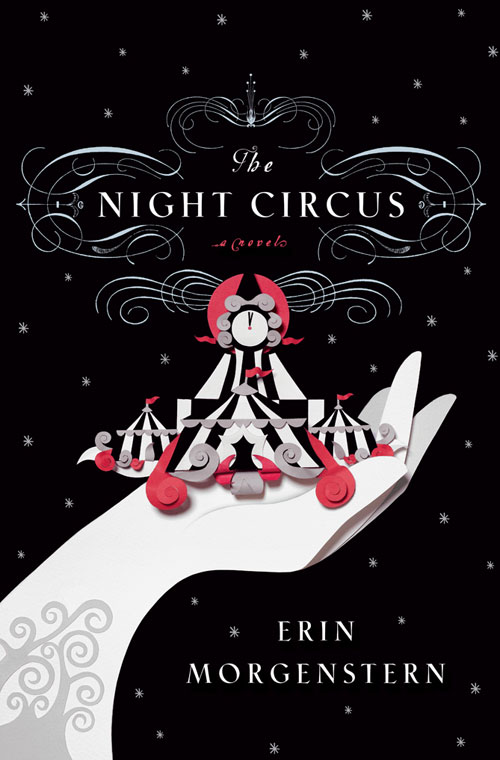
The Night Circus by Erin Morgenstern

The Night Circus by Erin Morgenstern is a fantastic debut novel by a writer to watch.  While not a perfect novel, it ranks high on my list for the year.

The novel opens beautifully:
The circus arrives without warning.  No announcements precede it, no paper notices on downtown posts and billboards, no mentions or advertisements in local newspapers.  It is simply there, when yesterday it was not.
The book is about a contest between two illusionists who have been trained since childhood by their masters.  Set in the late 1800s and early 1900s, the players, Celia and Marco, spend their lives battling in a game, the rules of which they do not know.  The forum for the contest is a circus, Le Cirque des Reves, a travelling circus that opens at nightfall and closes at dawn.  Celia's father, a famed illusionist, takes custody of her as a young child and trains her for this contest.  Marco is plucked out of an orphanage and trained by a mysterious man.  In the circus, they create magical (not slight of hand) illusions that dazzle attendees.  The contestants know they are in a contest but don't know each other (for at least a while) and are inextricably bound to each other.  Over the course of the novel, they learn about themselves, the contest, others affected by the contest and each other.

The writing beautifully captures the magical and ephemeral quality of the characters' existence.  The novel jumps through several time periods and to many different locations, further creating the feeling of an illusion.  The chapters are well constructed, not too long, and full of movement.  At no point does Morgenstern wander into long (or short) boring narratives.  Morgenstern is a painter, and her novel feels like it is a painting.  She masterfully employs color to create moods.

Where the novel came up a bit short is at the ending.  It was good and brought closure but it lacked the richness that filled the rest of the novel.  In an interview, Morgenstern said that creating scenes and images are her strength, not plot.  For a debut novelist, she admirably handled all of it but the plot came up a bit short  at the end.

Usually, I do not love "magical realism" books.  This is an exception.  The advance buzz for this book was immense; the novel held up to expectations.  Comparisons have been drawn to Harry Potter, Twilight and other magical universe books.  I would recommend reading this book.  It is enjoyable and will be the first of many from Morgenstern.


The book preview:

An interview with the author:

Wednesday, September 21, 2011

Kindle Books Now Available at Local Libraries


Amazon announced on the Kindle blog that Kindle books are available through the library (the NY Public Library has them as well). Many libraries already offer other e-books in epub format (usable on the Nook, the Sony reader, Kobo etc.).

The Kindle post is below:

We’re excited to tell you that starting today, Kindle and Kindle app customers can borrow Kindle books from more than 11,000 libraries in the United States. When you borrow a Kindle book from your local library, you’ll find all the unique features you love about Kindle books:
  • Whispersync automatically syncs your margin notes, highlights and bookmarks – even once you return a Kindle book to your library, we’re going to back up your notes and bookmarks, so the next time you check out the book (or if you decide you want to buy the Kindle book) your notes and bookmarks will be there, waiting for you.
  • Read Everywhere – when you check out a Kindle book from your local library, you can read it on your Kindles and your free Kindle apps for the most popular devices and platforms.
  • Real Page Numbers – our page numbers match the page numbers in print books, so you can easily reference and cite passages and read alongside others in your book club or class.
  • Facebook and Twitter Integration – Share meaningful passages with friends and family with built-in Twitter and Facebook integration.
  • Wireless delivery – Your Kindle library books can be delivered via Wi-Fi, so there’s no need to transfer books to your Kindle via USB
To learn more about borrowing Kindle books from your local library, go to: www.amazon.com/kindle/publiclibraries. To find out if your library will have Kindle books available, visit your library’s website.

http://www.kindlepost.com/2011/09/kindle-books-now-available-at-local-libraries.html

Tuesday, September 20, 2011

On Canaan's Side by Sebastian Barry

On Canaan's Side: A NovelOn Canaan's Side is a new novel by two time Man Booker shortlisted author Sebastian Barry.  This novel was on the 2011 Man Booker long list but, to my surprise, did not make it to the shortlist.

The novel is the story of Lilly Bere's life, told over the series of days immediately after the passing of her grandson, Bill.  Her story spans decades, wars and countries.  Bere was born in Ireland, where her childhood was shrouded with the death of her mother and brother.  As a young woman, she had to flee her country and seek refuge in the United States.  Throughout her life, Bere continuously confronts loss and heartbreak; yet, she manages to love and grow.

The writing is the strength of this book.  Barry creates a wondrous intimacy with Bere through beautiful and picturesque writing.  While the book is quite sad, Bere does not drown in her sadness.  Barry does a masterful job carrying the story forward.

I like stories from the Irish literary tradition, for example Colum McCann (Let the Great World Spin), William Trevor (Selected Stories) and John Banville (The Sea).  Barry fits right in.  Beautiful descriptions, moving stories, well-developed characters.

Although this did not make the Booker shortlist (I have issues with the list and what is not on the list), this novel is well worth reading.  Read it slowly and savor it.