Monday, October 31, 2011

The Buddha in the Attic by Julie Otsuka


The Buddha in the Attic by Julie Otsuka is one of the finalists for the 2011 National Book Award for Fiction.  It is a compact, powerful novel that I would have missed but for its nomination.  It is excellent and worthy of recognition.

The novel is the tale of Japanese mail-order brides and their experience coming to and in California from the 1920s through WWII.  The obscure nature of the story alone would have made this novel worth reading.  However, Otsuka uses the first person plural to narrate the story of dozens of women into an immense tapestry.  While the chorus sings the story, individuals step forward for a clause, sentence or even  paragraph solo and then seamlessly fade back into the chorus.  The talent it takes to create such a convincing product cannot be underestimated.

This is a story that you will read in just a few hours but one that will stick with you because of its content and form.  It is well worth reading.


Monday, October 24, 2011

A Study in Sherlock


Regular readers of this blog know that I love Sherlock Holmes (see for example, The Sherlockian).  When two of my favorite Sherlock Holmes authors/scholars teamed up to put together a new Sherlock Holmes anthology, I was extremely excited.  The book, A Study in Sherlock: Stories Inspired by the Holmes Canon, edited by Leslie Klinger and Laurie King, is terrific and a must read for Holmes devotees.

Les Klinger is a Sherlock Holmes scholar extraordinaire.  Several years ago, he published  The New Annotated Sherlock Holmes: The Complete Short Stories and The New Annotated Sherlock Holmes: The Novels.  The scholarship is amazing; the books are beautiful.  Laurie King picked up the Sherlock Holmes stories from Holmes' retirement and added a new, smart, spunky partner, Mary Russell, and started a wildly successful series.  The latest installment is The Pirate King.

King and Klinger rounded up some of the best, current mystery writer talents and asked them to write a story that is inspired by the Canon.  (A list of the contributors is below.)  The writers had a lot of license.  Some of the stories are classic pastiches (stories that pattern Doyle's style).  Some of the stories are set in modern times and only loosely (but faithfully) tie to the Canon.  One story is told in the form of a blog.  Another is set in Alaska.  There is even a graphic novel short story.

If you have not read Sherlock Holmes ever, I'd highly recommend that you do.  It is the foundation of all mysteries.  Holmes is the most recognizable character in Western literature (a pipe and a deerstalker, need I say more).  Even if you have not read what Sherlockian's affectionately call the Canon (the original short stories and the novels written by Doyle), this collection is excellent and fun to read.

The contributors (and links to their websites) are as follows:
Alan Bradley
Tony Broadbent
Jan Burke
Lionel Chetwynd
Lee Child
Colin Cotterill
Neil Gaiman
Laura Lippman
Gayle Lynds and John Sheldon
Phillip Margolin and Jerry Margolin
Margaret Maron
Thomas Perry
S. J. Rozan
Dana Stabenow
Charles Todd
Jackie Winspear


A link to the book's blog is here.  Happy reading.

Tuesday, October 18, 2011

Man Booker Winner is Julian Barnes

The 2011 Man Booker Prize went to Julian Barnes for The Sense of an Ending.  It is the shortest novel to win the Man Booker prize.  It was a terrific book and worthy of the Booker prize.  My review of it is here.

Barnes at the Man Book Award Ceremony

The Sojourn by Andrew Krivak

The Sojourn by Andrew Krivak is a new novel, which was just nominated as a finalist for the National Book Award for Fiction.  Published earlier this year, Krivak's novel slipped under the radar screen and rightfully was rescued from oblivion by the nomination.  It is terse, painful and dramatic novel, which you will be able to read in a sitting or two.

The novel follows the life of Jozef Vinich.  Born in Pueblo, Colorado in the late eighteen hundreds to immigrant parents, Jozef's life is forever changed by a horrific family tragedy.  Jozef is taken back to rural Austria-Hungary by his father, where his father raises him and a distant cousin.  The cousin and Jozef grow up together, tending the father's sheep herd and learning to hunt, hide and shoot from the father.  In 1916, the boys join the army and become elite sharpshooters.  They live in the trenches, hunt the enemy and try desperately to survive.  As the war closes, Jozef tries to find his way back to the life that was and forges new relationships on the way.

The book is powerful, well written and well executed.  To quote one critic, "it is a war story, love story, and coming of age novel all rolled into one."  It is worth reading.

The publisher, Bellevue Literary Press, is the same small press that put out Paul Harding's Tinkers, which was the surprising winner of the Pulitzer two years ago.

The author's website here.  An interview with the author here.

Monday, October 17, 2011

National Book Awards 2011 Announced


2011 National Book Award Fiction Finalists

Earlier this week, the finalists for all categories were announced.
Andrew Krivak, The Sojourn
Téa Obreht, The Tiger's Wife (my review here)
Julie Otsuka, The Buddha in the Attic
Edith Pearlman, Binocular Vision
Jesmyn Ward, Salvage the Bones
I've previously reviewed The Tiger's Wife and also have read two and a half of the other finalists (The Sojourn, The Buddha in the Attic and Binocular Vision).  I'll post reviews of the others later.  Of the four books I have read, you cannot go wrong with any of them. I suspect that this is a showdown between the newcomer, Téa Obreht, and an under-appreciated old-timer, Edith Pearlman.

What is interesting about the list is that although all of the books are great, other than The Tiger's Wife none of them have been part of the mainstream literary conversation.  In addition, many critically and popularly acclaimed  books did not make the list; for example, The Art of Fielding, The Marriage Plot, State of Wonder.  The blogosphere is lit up with the question: should literary prizes consider a books success in the media and with readers in making their selection or should it be an "ivory tower" selection (NPR's view here and Laura Miller of Salon here) .  Two years ago one of my favorites, Let the Great World Spin won the prize and had already achieved critical and popular success.  Last year, a dark horse, Lord of Misrule won and then disappeared while Franzen's Freedom didn't even make the list.

Even if a book is the equivalent of literary broccoli, literary prizes can unearth under-marketed and undiscovered talent.  Edith Pearlman is a perfect example.  If you read the introduction to the collection, written by Ann Patchett, she marvels that Pearlman has not be received by a wider audience.  A win with a prize like the National Book Award exposes her to an audience that might not have seen her.  If ultimately she does not have broad appeal, the book will fade into the backlists (e.g., Lord of Misrule).  Commercial success should be considered but should not drive these lists.

For the nonfiction readers, the finalists are:


2011 National Book Awards Nonfiction Finalists
Deborah Baker, The Convert: A Tale of Exile and Extremism
Mary Gabriel, Love and Capital: Karl and Jenny Marx and the Birth of a Revolution 
Stephen Greenblatt, The Swerve: How the World Became Modern 
Manning Marable, Malcolm X: A Life of Reinvention
Lauren Redniss, Radioactive: Marie & Pierre Curie, A Tale of Love and Fallout
Winners will be announced at the awards ceremony at Ciprani Wall Street on November 16.  John Lithgow is hosting.

Monday, October 10, 2011

The Art of Fielding by Chad Harbach

The Art of Fielding by Chad Harbach, a first time novelist and a co-founder of the literary journal n+1, is a gorgeous novel that is one of the "must reads" for 2011.  Harbach creates a beautiful, elegant and believable world in this novel.  I loved it.


The story is set at a Midwest university, Westish, and is built around Henry Skrimshander, a small shortstop with amazing potential.  He fields balls perfectly and rifles them to first base effortlessly.  (The language Harbach uses to describe the fielding in the first chapter is worth reading alone.)  Skrimshander is discovered by the captain of the Westish team, large and rough, Michael Schwartz.  Under his watch, Schwartz develops Skrimshander to be major league material at this backwater university.  After establishing himself as a record breaking fielder, Skrimshander releases a throw to first base that misses its target and unleashes devastating consequences for Skrimshander and the team.  Like Chuck Knoblauch and Steve Sax, one missed throw undermines Skrimshander's confidence and potentially his baseball career and life.  Meanwhile, Schwartz is trying to make post-college plans and facing the challenges of leaving college.  Harbach populates the university with diverse characters: the university president, who is a perennial bachelor looking for love; his prodigal daughter, who returns to the university and her father after leaving school to marry an older man; and, Skrimshander's gay roommate and teammate, who plays a pivotal role in most of the characters' lives.  The characters confront the challenges of failure, changing relationships and redefining  roles for themselves in their community as the community shifts.

Harbach does a masterful job with this story.  The writing is lyrical and readable.  The story moves.  The characters live in a world of uncertainty and confront their fears.  While the baseball is very important to this book, it is as much a book about failure, the fear of failure and overcoming limitations as it is about baseball.  Harbach sprinkles literary allusions throughout the book, key among them, Melville's Moby Dick.

Several current literary luminaries got behind this book and added their blurbs: Jonathan Franzen, Téa Obreht and James Patterson.  


Recommendation:  Read this.  If you liked The Natural (or anything that ties literature and baseball together), this is a must.  If you like new and interesting voices, this is a must.  If baseball is not your thing, don't be put off.  You could still love The Great Gatsby is you didn't like large lawn parties and liquor.

Vanity Fair wrote a great article about the making of this book, which they turned into a Kindle single.  It is a great look into the publishing industry.  The link to the book is here.

An interview with the author here.


Tuesday, October 4, 2011

National Book Award 5 Under 35 Honorees


Today, the National Book Foundation announced the 5 Under 35 Honorees for 2011


  • Shani BoianjiuThe People of Forever Are Not Afraid (Hogarth, an imprint of Crown Publishers, forthcoming in 2013)
  • Danielle EvansBefore You Suffocate Your Own Fool Self  (Riverhead Books, 2010)
  • Mary Beth KeaneThe Walking People (Mariner Books/Houghton Mifflin Harcourt, 2009)
  • Melinda MoustakisBear Down, Bear North: Alaska Stories (The University of Georgia Press, 2011)
  • John Corey WhaleyWhere Things Come Back (Atheneum Books for Young Readers, 2011)

5 Under 35 Honorees
Shani BoianjiuShani Boianjiu was born in Jerusalem in 1987, from an Iraqi and Romanian background.  She was raised in a small town on the Lebanese border.  At the age of 18, she entered the Israeli Defense Forces and served for two years.  She is at work on her first novel, The People of Forever Are Not Afraid.


Danielle EvansDanielle Evans is the winner of the 2011 PEN/Robert W. Bingham Prize. A graduate of Columbia University and the Iowa Writers' Workshop, her stories have appeared in The Paris ReviewA Public SpaceThe Best American Short Stories 2008, and The Best American Short Stories 2010. Her collection of stories, Before You Suffocate Your Own Fool Self, is her first book. She lives in Washington, D.C.
daniellevaloreevans.com


Mary Beth KeaneMary Beth Keane graduated from Barnard College in 1999, and received an MFA from the University of Virginia in 2005.  She was a winner of the Chicago Tribune's Nelson Algren Prize, and has been nominated for a Pushcart Prize. One of her stories was selected as a PEN/O. Henry Recommended Story for 2009, and her first novel, The Walking People, received Honorable Mention at the 2010 PEN/Hemingway Awards. She is currently working on her second novel, and lives in Pearl River, New York with her husband and two sons. marybethkeane.com


Melinda MoustakisMelinda Moustakis was born in Fairbanks, Alaska and raised in Bakersfield, California. She received her MA from UC Davis and her PhD in English and Creative Writing from Western Michigan University.Bear Down, Bear North: Alaska Stories, her first book, won the 2010 Flannery O'Connor Award in Short Fiction. Her stories have appeared inAlaska Quarterly ReviewKenyon Review, Conjunctions, and elsewhere. She is currently a visiting professor at Pacific Lutheran University. www.melindamoustakis.com


John Corey WhaleyJohn Corey Whaley is a former teacher from Springhill, Louisiana. Where Things Come Back is his first novel. He was named a Spring 2011 Flying Start Author by Publishers Weekly.  His novel was a Spring 2011 Okra Pick by the Southern Independent Booksellers Alliance and is currently a nominee for the American Library Association's Best Fiction for Young Adults 2012.  The ABC Children's Group also included Whaley on their New Voices for Teens Top Ten List this year.  He found an agent for Where Things Come Back through www.webook.com, being the first author to do so using this medium, and you can watch him on YouTube as WeBook’s #1 AgentInbox Success Story. For more information, visit his website,www.johncoreywhaley.com, or follow him @corey_whaley. 

That Used to Be Us by Thomas Friedman and Michael Mandelbaum

That Used to Be Us: How America Fell Behind in the World It Invented and How We Can Come BackThat Used to Be Us: How America Fell Behind in the World It Invented and How We Can Come Back is a new searching book by Thomas Friedman and Michael Mandelbaum.  While I may not always agree with Friedman's views, he is an engaging and thoughtful writer worth listening to.  This book is an honest, searching look at where America is in the world and what we are not doing right.  


The authors claim that they are optimistic about the future of America but they paint a pretty bleak picture of where we are today.  They assert that we are not tackling the difficult questions of the day and are merely deferring them, which will result in dire consequences.  The authors fill in their arguments with upsetting statistics and anecdotes:
  • 25% of ninth graders don't graduate high school within four years.  Only Mexico, Spain, Turkey and New Zealand have higher dropout rates.
  • Thirty years ago, 10 percent of California’s general revenue fund went to higher education and 3 percent to prisons. Today nearly 11 percent goes to prisons and 8 percent to higher education.
  • 75% of Americans, between the ages of 17 to 24, are unable to enlist in the military today because they have failed to graduate from high school, have a criminal record or are physically unfit.
The statistics keep coming at you page after page and make the strong argument that we have fallen behind.  What happened?  The authors argue that after the Cold War we enjoyed the peace dividend and then spent billions after 9/11 to beat back the losers of globalization.  And, as a result, we borrow and spend and have fallen behind.


So, what do the authors suggest?  
  • Reforming our education system to attract and keep good teachers.
  • Changing the nature of teacher tenure so that performance (and not merely seniority) matters.
  • Teaching real life skills to students in the internet, hyper-connected age.
  • Making it easier for immigrants to come into the country, which has always been a source of strength and renewal for the workforce.
  • Balancing the budgets through meaningful reform and revised tax policies.
  • Investing real money into green technology.
  • Spending money on infrastructure. 
A thoughtful read of the author's proposals will show that these are progressive (but not really liberal/democratic) views.  As we delve into the 2012 election cycle, they are advocating a smart, long term approach.  The question is whether we are prepared to make the sacrifices and changes that are demanded to put America back on top.


Tuesday, September 27, 2011

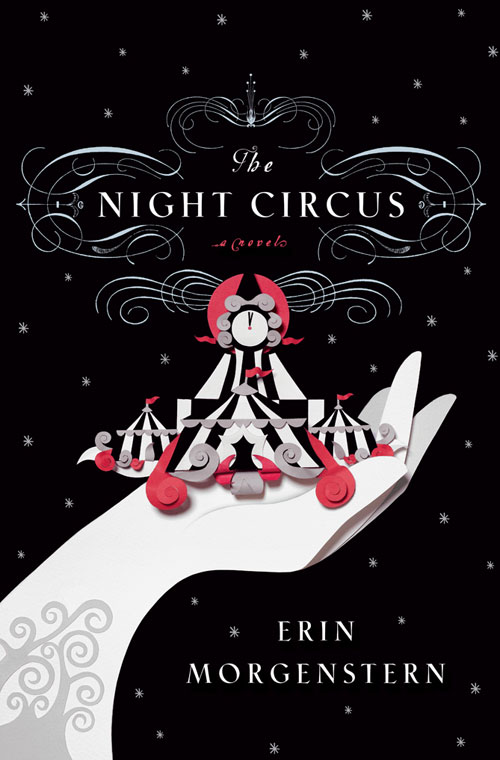
The Night Circus by Erin Morgenstern

The Night Circus by Erin Morgenstern is a fantastic debut novel by a writer to watch.  While not a perfect novel, it ranks high on my list for the year.

The novel opens beautifully:
The circus arrives without warning.  No announcements precede it, no paper notices on downtown posts and billboards, no mentions or advertisements in local newspapers.  It is simply there, when yesterday it was not.
The book is about a contest between two illusionists who have been trained since childhood by their masters.  Set in the late 1800s and early 1900s, the players, Celia and Marco, spend their lives battling in a game, the rules of which they do not know.  The forum for the contest is a circus, Le Cirque des Reves, a travelling circus that opens at nightfall and closes at dawn.  Celia's father, a famed illusionist, takes custody of her as a young child and trains her for this contest.  Marco is plucked out of an orphanage and trained by a mysterious man.  In the circus, they create magical (not slight of hand) illusions that dazzle attendees.  The contestants know they are in a contest but don't know each other (for at least a while) and are inextricably bound to each other.  Over the course of the novel, they learn about themselves, the contest, others affected by the contest and each other.

The writing beautifully captures the magical and ephemeral quality of the characters' existence.  The novel jumps through several time periods and to many different locations, further creating the feeling of an illusion.  The chapters are well constructed, not too long, and full of movement.  At no point does Morgenstern wander into long (or short) boring narratives.  Morgenstern is a painter, and her novel feels like it is a painting.  She masterfully employs color to create moods.

Where the novel came up a bit short is at the ending.  It was good and brought closure but it lacked the richness that filled the rest of the novel.  In an interview, Morgenstern said that creating scenes and images are her strength, not plot.  For a debut novelist, she admirably handled all of it but the plot came up a bit short  at the end.

Usually, I do not love "magical realism" books.  This is an exception.  The advance buzz for this book was immense; the novel held up to expectations.  Comparisons have been drawn to Harry Potter, Twilight and other magical universe books.  I would recommend reading this book.  It is enjoyable and will be the first of many from Morgenstern.


The book preview:

An interview with the author:

Wednesday, September 21, 2011

Kindle Books Now Available at Local Libraries


Amazon announced on the Kindle blog that Kindle books are available through the library (the NY Public Library has them as well). Many libraries already offer other e-books in epub format (usable on the Nook, the Sony reader, Kobo etc.).

The Kindle post is below:

We’re excited to tell you that starting today, Kindle and Kindle app customers can borrow Kindle books from more than 11,000 libraries in the United States. When you borrow a Kindle book from your local library, you’ll find all the unique features you love about Kindle books:
  • Whispersync automatically syncs your margin notes, highlights and bookmarks – even once you return a Kindle book to your library, we’re going to back up your notes and bookmarks, so the next time you check out the book (or if you decide you want to buy the Kindle book) your notes and bookmarks will be there, waiting for you.
  • Read Everywhere – when you check out a Kindle book from your local library, you can read it on your Kindles and your free Kindle apps for the most popular devices and platforms.
  • Real Page Numbers – our page numbers match the page numbers in print books, so you can easily reference and cite passages and read alongside others in your book club or class.
  • Facebook and Twitter Integration – Share meaningful passages with friends and family with built-in Twitter and Facebook integration.
  • Wireless delivery – Your Kindle library books can be delivered via Wi-Fi, so there’s no need to transfer books to your Kindle via USB
To learn more about borrowing Kindle books from your local library, go to: www.amazon.com/kindle/publiclibraries. To find out if your library will have Kindle books available, visit your library’s website.

http://www.kindlepost.com/2011/09/kindle-books-now-available-at-local-libraries.html

Tuesday, September 20, 2011

On Canaan's Side by Sebastian Barry

On Canaan's Side: A NovelOn Canaan's Side is a new novel by two time Man Booker shortlisted author Sebastian Barry.  This novel was on the 2011 Man Booker long list but, to my surprise, did not make it to the shortlist.

The novel is the story of Lilly Bere's life, told over the series of days immediately after the passing of her grandson, Bill.  Her story spans decades, wars and countries.  Bere was born in Ireland, where her childhood was shrouded with the death of her mother and brother.  As a young woman, she had to flee her country and seek refuge in the United States.  Throughout her life, Bere continuously confronts loss and heartbreak; yet, she manages to love and grow.

The writing is the strength of this book.  Barry creates a wondrous intimacy with Bere through beautiful and picturesque writing.  While the book is quite sad, Bere does not drown in her sadness.  Barry does a masterful job carrying the story forward.

I like stories from the Irish literary tradition, for example Colum McCann (Let the Great World Spin), William Trevor (Selected Stories) and John Banville (The Sea).  Barry fits right in.  Beautiful descriptions, moving stories, well-developed characters.

Although this did not make the Booker shortlist (I have issues with the list and what is not on the list), this novel is well worth reading.  Read it slowly and savor it.

Monday, September 12, 2011

The Submission by Amy Waldman

The Submission: A NovelThe Submission, a first novel by Amy Waldman, deservedly has received a lot of attention because of the book's timely theme: 9/11.  I enjoy reading books that thematically tie to life events: The Hunchback of Notre Dame while sitting next to the gargoyles in Paris;  The Decline and Fall of Roman Empire while sitting in the Forum in Rome; Moby Dick while on Martha's Vineyard.  The right book can add a lot of meaning and texture to an experience.  The Submission has mostly succeeded at fulfilling that need for me as we approach the tenth anniversary of 9/11.

Amy Waldman, a former New York Times reporter, has written a book that is worth considering in our post-9/11 world.  The novel opens in the aftermath of an unspecified Islamic-fascist terrorist attack.  A committee has been created to consider submissions in an open, blind process for a memorial for the victims of the attack.  The committee is chaired by a stately former bank chairman and includes artists, architects, political representatives and a widow who represents the victims' families.  As the novel opens, the committee has completed its selection process and chosen a geometric, memorial garden.  When the chairman opens the envelope, to the committee's shock, it realizes that the winning selections was submitted by a Muslim architect, Mohamed Kahn.  Kahn is an American born, non-religious Muslim.  Kahn and his submission become a wrenching political and emotional flash point for the committee, the victims' families, the politicians and the nation.  The characters must decide whether to allow the result of a democratic process stand, whether it is appropriate to allow a co-religionist of the terrorists to design the memorial and whether tolerance should trump fear.  Making matters worse, Kahn will not denounce the terrorists (I'm an American like you; why should I have to denounce them), Kahn refuses to pander to the fears and concerns of the committee, the politicians and the victims' families.  Further, his design appears to be inspired by Islamic victory gardens.  The story, which Waldman began prior to the Ground Zero mosque controversy, challenges the characters and readers to consider how our values have changed as a result of the attack.

As a novel, The Submission was very good, fast reading, relevant and well constructed.  Kahn's motivations for submitting the garden could have been explored more.  While the dialogue was believable, a few of the characters could have been developed a bit better.  Given the timing of the release of this novel and the writer's background (NYT), the novel has received a fair amount of attention, perhaps a bit more than it deserved on its merits alone.

If you are like me and enjoy reading timely books, I would strongly consider The Submission.  If this does not sound quite right to you, Commentary Magazine has issued a list of 9/11 literature.  Click here.  Many of them use 9/11 as background (e.g., a marriage being pulled apart in the aftermath of the attacks) rather than deal with the attack or its aftermath head on.

Click here for a very good interview of Waldman with the NYT.

Thursday, September 8, 2011

Man Booker Short List Announced

Earlier this week, the 2011 Man Booker Prize Shortlist was announced.  The titles are:


Julian Barnes’s The Sense of an Ending (Jonathan Cape)
Carol Birch Jamrach’s Menagerie (Canongate Books)
Patrick deWitt’s The Sisters Brothers (Granta)
Esi Edugyan’s Half Blood Blues (Serpent’s Tail)
Stephen Kelman’s Pigeon English (Bloomsbury)
A. D. Miller’s Snowdrops (Atlantic)


What a surprising list!  The list includes two debut novelists (Miller and Kelman), four independent publishers and two Canadians.  Alan Hollinghurt, a former Booker winner whose The Stranger's Child was a very strong contender, surprisingly did not make the shortlist. 


So far, I have read three of the shortlist novels: Barnes, Miller and Birch.  Of them, Barnes, who has been on the Booker short list three times, is my favorite.  I was not a fan of Miller's book, and Birch's, while good, was not amazing.  Edugyan's is an interesting story -- the black experience in Nazi Germany.  (Since that is a less well-worn story, I think that's why my favorite, Alison Pick, didn't make the list.)  Pigeon English has received a lot of very good press and one the Guardian First Novel Award. It is the story of an 11 year old Ghana-born child living among the gangs and projects of London.  I've read part of it and the voice is strong.  Strangely, it includes a talking pigeon.  Critics don't like the pigeon but seem to forgive Kelman for it.  Lastly, there is The Sister's Brothers, a western.  While U.S. books are not eligible participants for the competition (and, many westerns come out of the US), since this was published first in Canada, it made it into the process.  


My guess is that it is either Barnes, Edugyan or Kelman.  (If Miller wins, I'm done making predictions.)  Because the process has favored the "new" and "innovative", I'm guessing it is Kelman.


The winner is announced on October 18.  Meanwhile, enjoy reading these novels.


Monday, September 5, 2011

Far to Go by Allison Pick

Far to Go: A Novel (P.S.)Far to Go by Alison Pick is on the 2011 Man Booker long list, and it really belongs there.  It is a gripping work that reads beautifully and easily.  It is one of my ten favorites of the year.

The novel is about a Jewish family in Czechoslovakia in 1938.  As the Nazis attack, the family must deal with fear, security and the unknown.  The family (a father, mother and young son) are barely affiliated Jews who must confront the fact that in the eyes of the Nazis, they are Jews.  The story is told from the point of view of their long-time nanny, Marta, a devoted, non-Jewish woman.  As she watches the horrors in the street and the impact on the family, she also must make hard choices.  A second (though minor) strand to this story is an unnamed modern-day historian who is studying the Kindertransport and the children that escaped.  Interspersed between the chapters are letters written to various family members, which adds to the authenticity of the story.

Having read many stories about the Holocaust, I was drawn into this one almost immediately.  Pick tells the tale convincingly.  The only critique is that Marta comes across as a bit naive sometimes, making her less credible.  Otherwise, the drama and pain that Pick portrays is moving.

If you like great historical literature, Holocaust oriented books or books like 22 Britannia Road, Major Pettigrew's Last Stand, The Invisible Bridge, this is a definite pick for you.  It is a terrific selection for any reading group.

Monday, August 29, 2011

Jamrach's Menagerie by Carol Birch

Jamrach's Menagerie: A NovelJamrach's Menagerie, a novel by Carol Birch, is a long listed 2011 Man Booker contender.  It is Birch's eleventh novel and her second time on the Booker long list.  This novel is the first of Birch's novels to be released in the U.S.  The bookies have this at 8/1 odds, which makes it six out of thirteen.

This is a grand, epic novel from the Victorian period.  Jaffy Brown, a London street kid, aged eight, comes face to face with an escaped tiger.  He wants to touch the tiger's nose.  He reaches out, strokes it and is grabbed by the tiger.  Saved from the jaws of the tiger by Mr. Jamrach, an explorer, entrepreneur and purveyor of curious creatures (including the escaped tiger), Jaffy and Jamrach become mentee and mentor.  Jaffy works for Jamrach and then finds himself on a whaler in search of a dragon in the Dutch East Indies.

The story has three parts.  First, life in London and working for Mr. Jamrach.  Second, the whaling experience and the hunt for the dragon. Third, the aftermath.  The most compelling part of the book was the last section, both heart wrenching and moving.  The first part feels like a Dickens book.  The second part is a less dramatic version of Moby Dick.   The third is not new either but it is worth reading.

The dialogue and the relationships Birch develops are authentic.  The writing is impressive.  The plot is well executed.  If you like Dickens, Melville, adventure stories, Patrick O'Brien and sea stories and/or the Victorian age, read this book.  It will transport you.

An interview with Birch here.

A short video teaser: